Family owned in Rockland County since 1986Open 7am–7pm, seven days · (845) 671-3798
Request an Estimate
Chimney masonry repair

Chimney Masonry Repair in Spring Valley, NY

Mortar wears out long before brick does. Chimney masonry repair in Spring Valley replaces failed joints and damaged brick before water gets behind them.

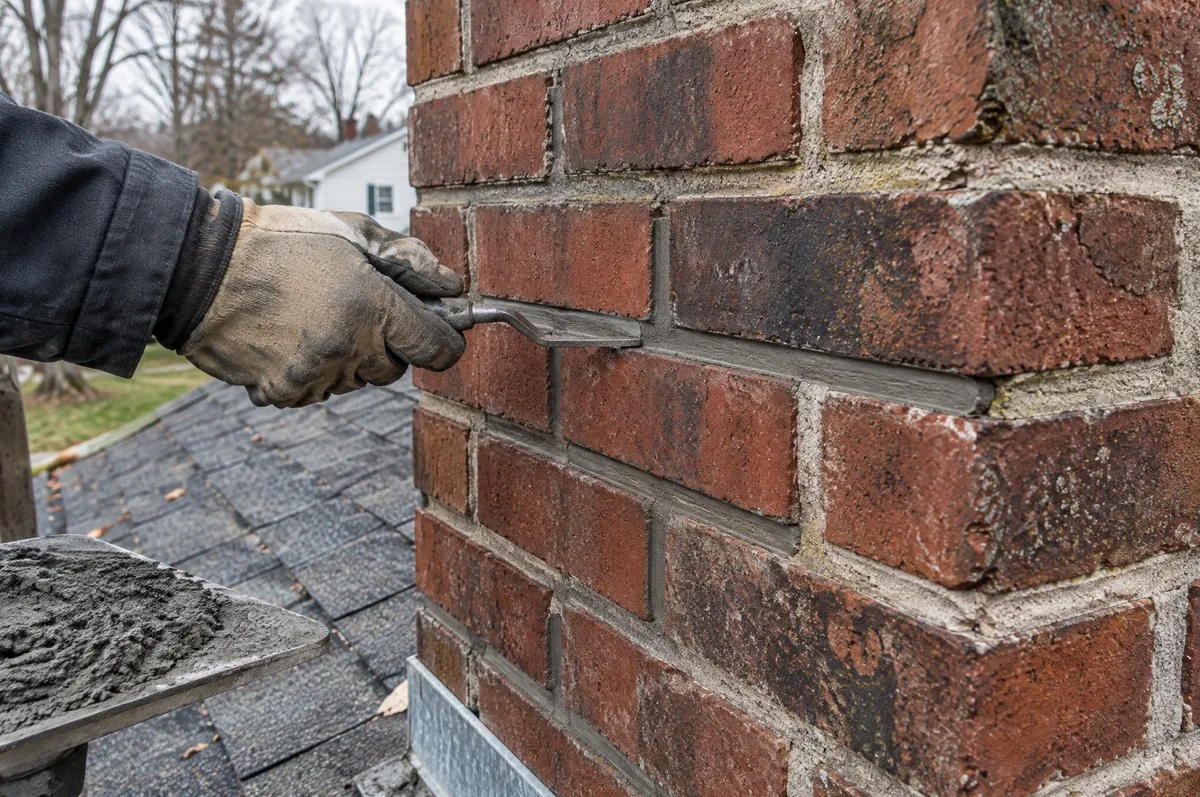
Gloved hand tooling a fresh mortar joint on a brick chimney

Most common cause

Water soaking into mortar joints and freezing. The joint recedes a little more each winter.

What does not fix it

Smearing new mortar over old joints, or patching with a mortar harder than the brick.

Where to start

A close look at every face of the chimney. A Level 1 inspection is $69.

How chimney masonry fails

A chimney is the most exposed masonry on a house. It stands above the roof with weather on all four sides and no eaves to shelter it. Mortar is the sacrificial part of the wall. It is softer than brick by design, so it erodes first.

Once a joint has receded, water sits on the ledge it leaves. It soaks into the brick, freezes, and pushes the face of the brick off. That flaking is called spalling, and it means the damage has moved from the mortar into the brick.

Signs to look for

  • Mortar joints that are recessed, sandy or missing
  • Brick faces that have flaked or popped off
  • White salt staining, called efflorescence
  • Cracks that step along the joints
  • Bits of brick or mortar on the roof or in the gutters

Masonry repairs, from small to large

The right one depends on how far the damage has gone.

Repointing

The old mortar is cut out to a proper depth and new mortar is packed in and tooled to shed water.

Brick replacement

Spalled bricks are cut out one at a time and replaced with matching units.

Crown work

A cracked crown lets water into the top courses. See chimney crown repair.

Water repellent

A breathable repellent on sound brick slows absorption without trapping moisture.

Rebuilding

When too many courses have failed, see chimney rebuild.
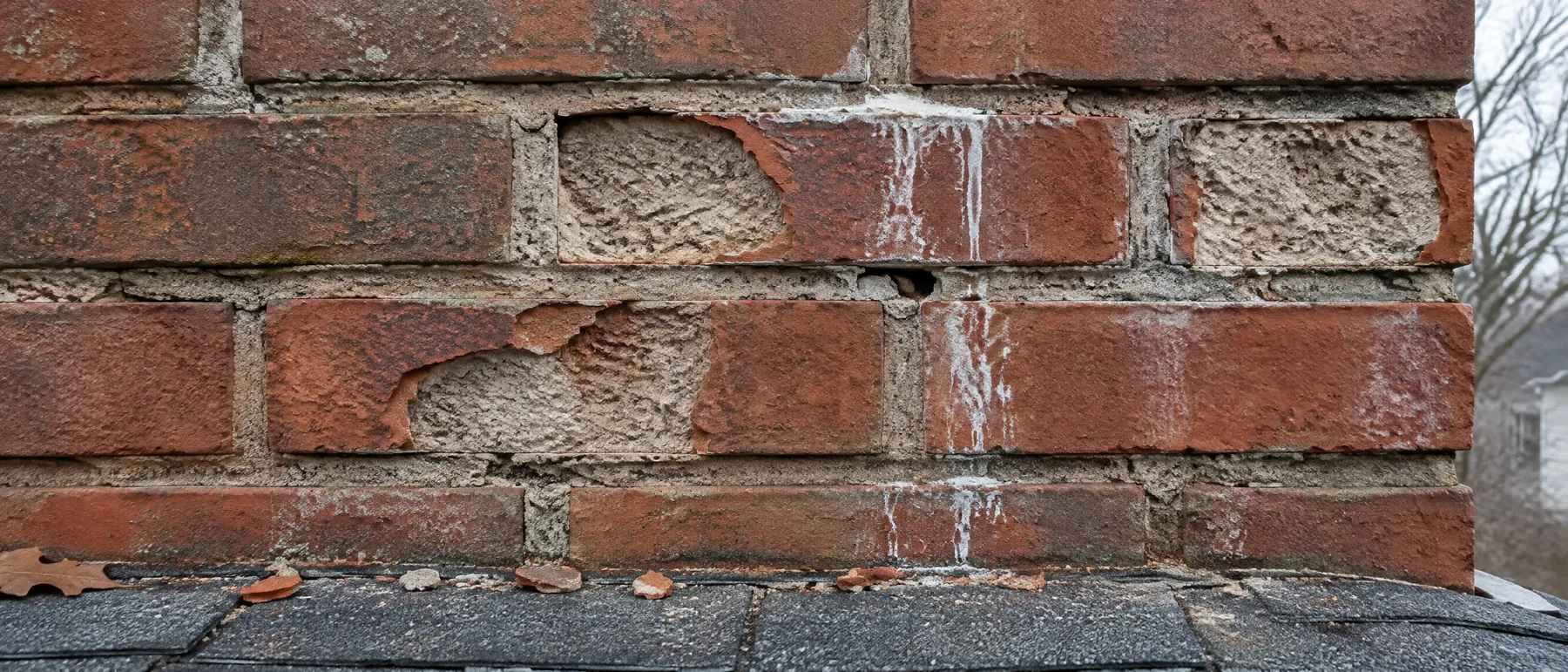
Brick chimney with spalled brick faces and eroded mortar joints

Why the mortar has to match

Older chimneys were laid with a softer, lime-rich mortar. Modern Portland cement mortar is much harder. When a hard mortar is used to repoint soft old brick, the brick becomes the weak part of the wall and its faces break away within a few winters.

A proper repair matches the new mortar to the strength of the original and to its color and joint profile, so the repaired area weathers at the same rate as the rest.

Repoint or rebuild?

Repointing is the right repair when the brick is still sound and the joints are the problem. If bricks are loose, the chimney leans, or the mortar has gone all the way through the wall, new joints will not hold it together. Water inside the stack may also be coming from the flashing, which is covered under chimney flashing repair, or from a leak higher up, covered under chimney leak repair.

What happens inside the wall

Masonry damage is not only cosmetic. Open joints let water reach the flue liner and the framing around the chimney. See chimney liner repair for what moisture does to clay flue tile.

Chimney masonry repair questions

How long does repointing last?

Properly matched and tooled mortar on a chimney with a sound crown and cap commonly lasts for decades. Exposure and maintenance decide the real figure.

Can spalled bricks be patched?

Not reliably. A patch over a spalled face tends to come off. Replacing the damaged brick is the lasting repair.

Is white staining a problem by itself?

Efflorescence is salt left behind by water moving through the masonry. The stain is harmless. The water that caused it is not.

Get the masonry looked at before winter